RobustMQ 0.3.0 RELEASE Officially Released
RobustMQ 0.3.0 is officially released today. This is an important milestone—not just a feature update, but a re-examination of RobustMQ's overall positioning and architecture.
Note: 0.3.0 is still in early stage and not recommended for production use. We plan to reach production-ready standard in 0.4.0, expected around May. We welcome early adoption and feedback to help us iterate faster.
Redefining RobustMQ
Starting with 0.3.0, RobustMQ's positioning is clearer: next-generation unified communication infrastructure for AI, IoT, and big data.
Specifically: RobustMQ is a Rust-built, unified communication platform designed for AI, IoT, and big data scenarios. With dual protocols (MQTT and Kafka), million-scale Topics, object storage (S3/MinIO, etc.) as data source, multi-mode storage (memory/hybrid/persistent/tiered), and intelligent data caching, it provides high-performance, low-cost, reliable communication for AI training, Agent communication, IoT (edge and cloud), and big data processing.
Why this positioning? After over a year of development, I increasingly see that existing communication middleware targets single scenarios. Kafka is built for big data log streams and can't support million-scale Topics or AI training data caching. EMQ targets IoT device connectivity and lacks high-throughput stream processing. Neither considers AI-era needs like Agent communication and GPU training data acceleration.
RobustMQ's opportunity: design for these scenarios from the start, not bolt them on later. 0.3.0 is the first step in that direction.
Minimal Architecture: Three Components
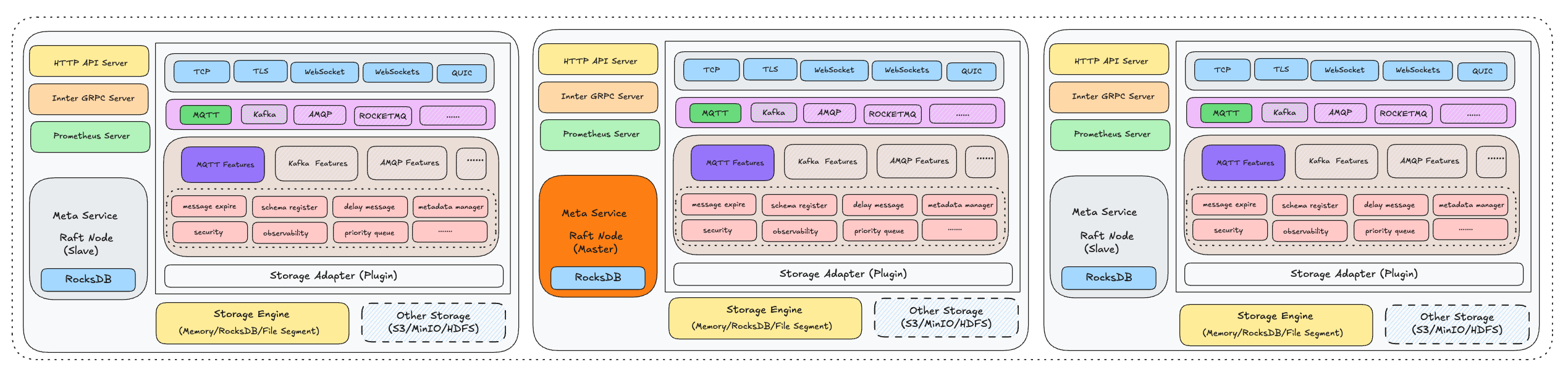
0.3.0 has a redesigned architecture. The system consists of three components:
Meta Service manages cluster metadata and coordination. Node state, Topic config, client sessions are stored in Meta Service, with consistency and HA guaranteed by a custom Multi Raft mechanism.
Broker handles protocol processing and request routing. Brokers are stateless—only connection handling, protocol parsing, message routing. No persistent data. This storage-compute separation lets Brokers scale horizontally; adding nodes doesn't require data migration.
Storage Engine handles data persistence. It supports three engines: Memory (pure memory, microsecond latency), RocksDB (unified KV, million-scale Topics), and File Segment (sequential write, high throughput for Kafka-style workloads). Protocol and storage are connected via a pluggable interface for future storage backends.
The architecture is fixed. Component boundaries are clear and won't shift for new protocols or storage. Adding a protocol means implementing parsing in the Broker layer; adding storage means implementing the Storage Engine interface. Core architecture stays stable.
Multi Raft is a major 0.3.0 investment. Meta Service uses a custom Multi Raft with independent Raft groups; different metadata types can be managed by different groups, avoiding a single Raft bottleneck. This supports future large-scale deployment.
MQTT Broker Core Functionality Complete
0.3.0 marks an important point for the MQTT Broker: core functionality covers the main production MQTT scenarios.
This includes: full MQTT 3.x and 5.0 support (connect/disconnect/keep-alive/will/retain, QoS 0/1/2), session persistence and recovery, shared subscription, topic rewrite and filtering, auth and ACL (username/password), offline message storage, delayed messages, and basic rule engine.
In practice: common IoT scenarios can run on RobustMQ's MQTT Broker today. Stability, ops tooling, and ecosystem integration still need work, but core protocol features are in place.
Code Quality: Multiple Refactors and Bug Fixes
0.3.0 includes substantial behind-the-scenes engineering.
The codebase has undergone multiple refactors: connection management from a single implementation to an extensible abstraction; storage engine decoupled into pluggable interfaces; gRPC client layer with retry and timeout; Handler layer with per-Handler monitoring.
Stability improvements: fixed several race conditions under high concurrency, edge-case bugs in session recovery, and memory growth with many connections. Performance: optimized connection establishment, reduced unnecessary gRPC calls; Handler timeout prevents task stalls from killing throughput.
These changes don't add features but determine whether the system can run reliably in production.
Ecosystem Tooling
A messaging system's success depends on more than core features—supporting tools matter. 0.3.0 improves tooling in six areas:
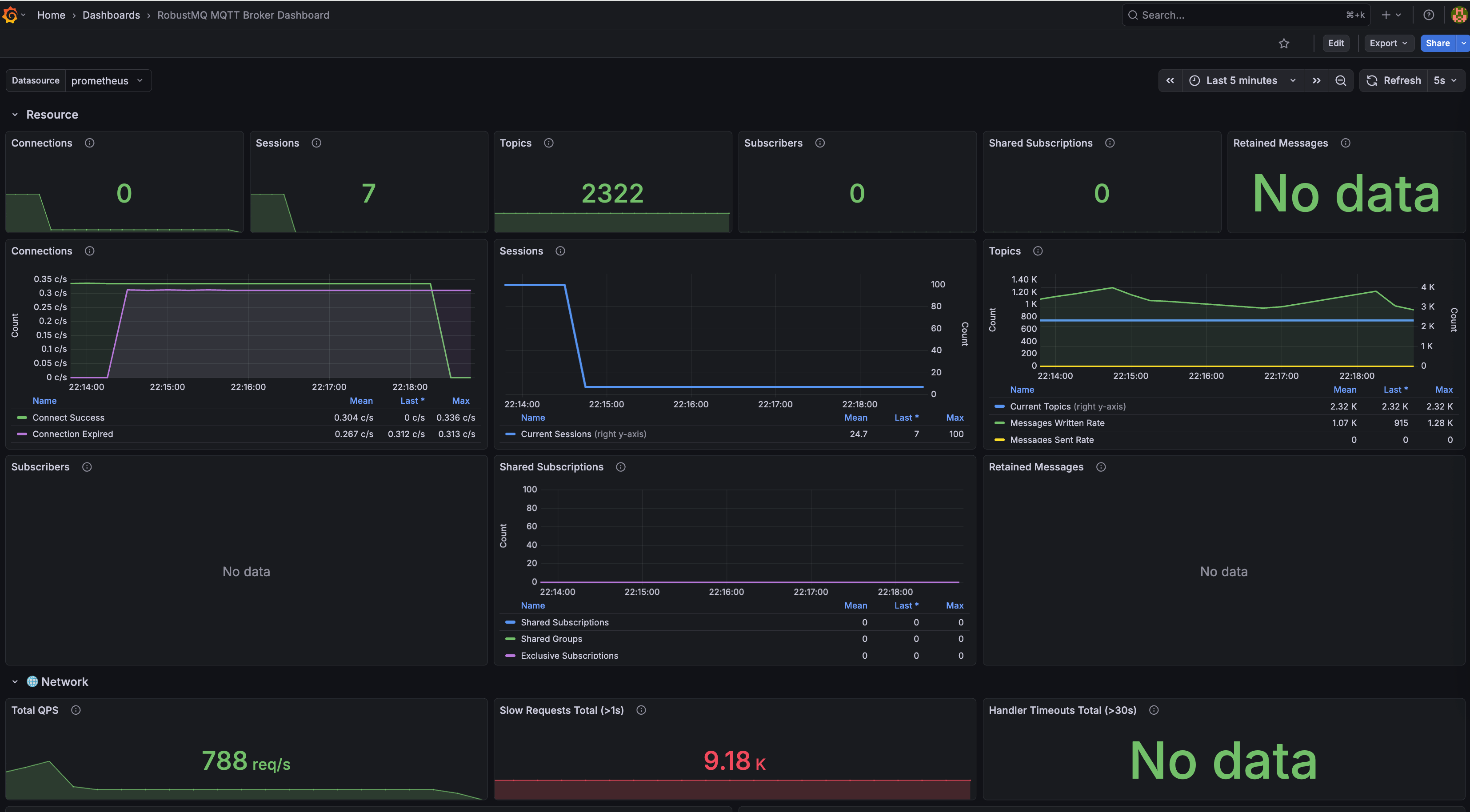
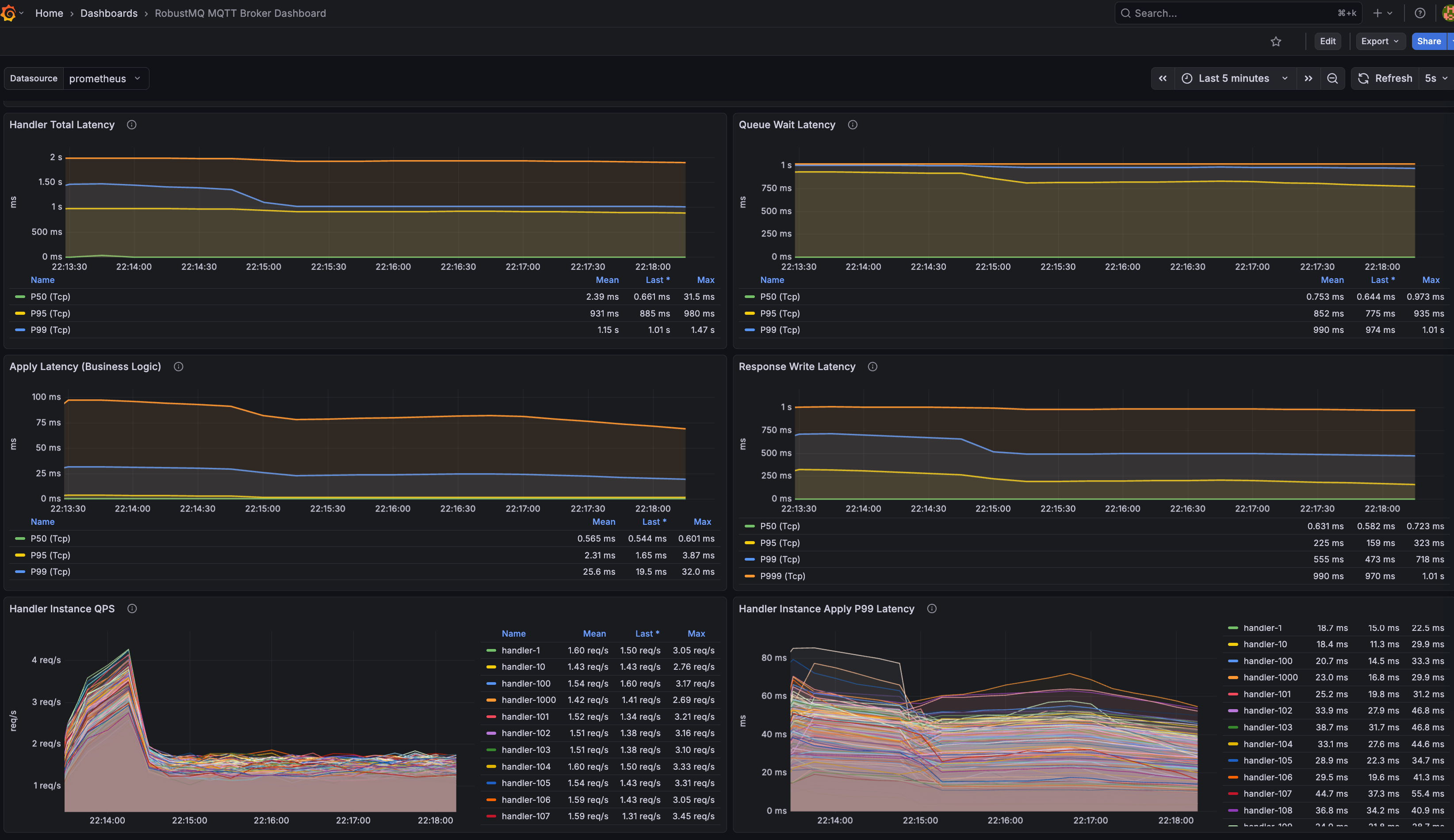
1. Grafana + Prometheus: Built-in metrics for connections, message throughput, Handler latency, gRPC latency, storage read/write, queue backlog. Ready-to-use Grafana dashboards can be imported to see full system state without custom setup.
2. Command CLI: Command-line management for cluster status, Topic management, client sessions, user permissions. All admin actions can be done from the CLI.
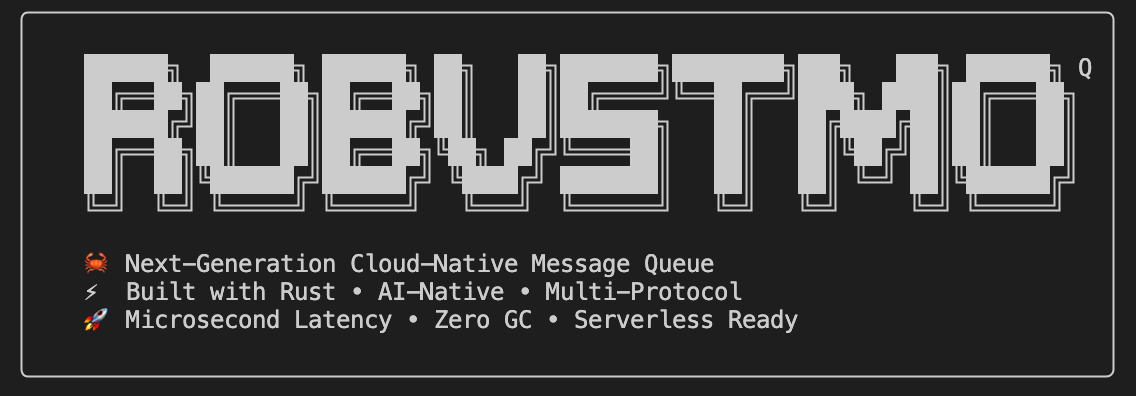
3. HTTP API: REST API for cluster management, Topic ops, user management, rule engine config, integrating with existing ops platforms and automation scripts.
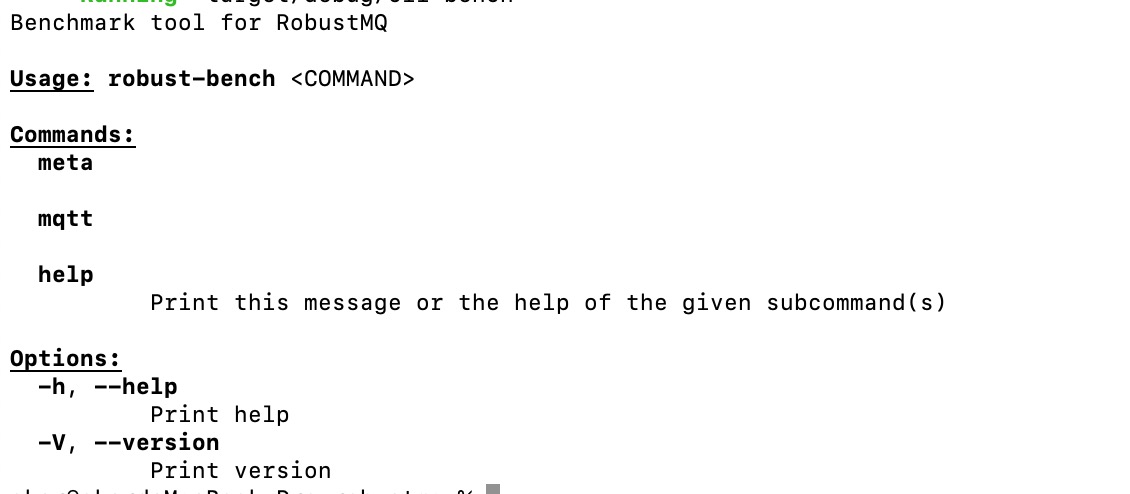
4. Bench CLI: Built-in benchmarking for MQTT connect, publish, subscribe. Parameters include concurrency, message rate, payload size, duration—useful for validating performance and stability after deployment.
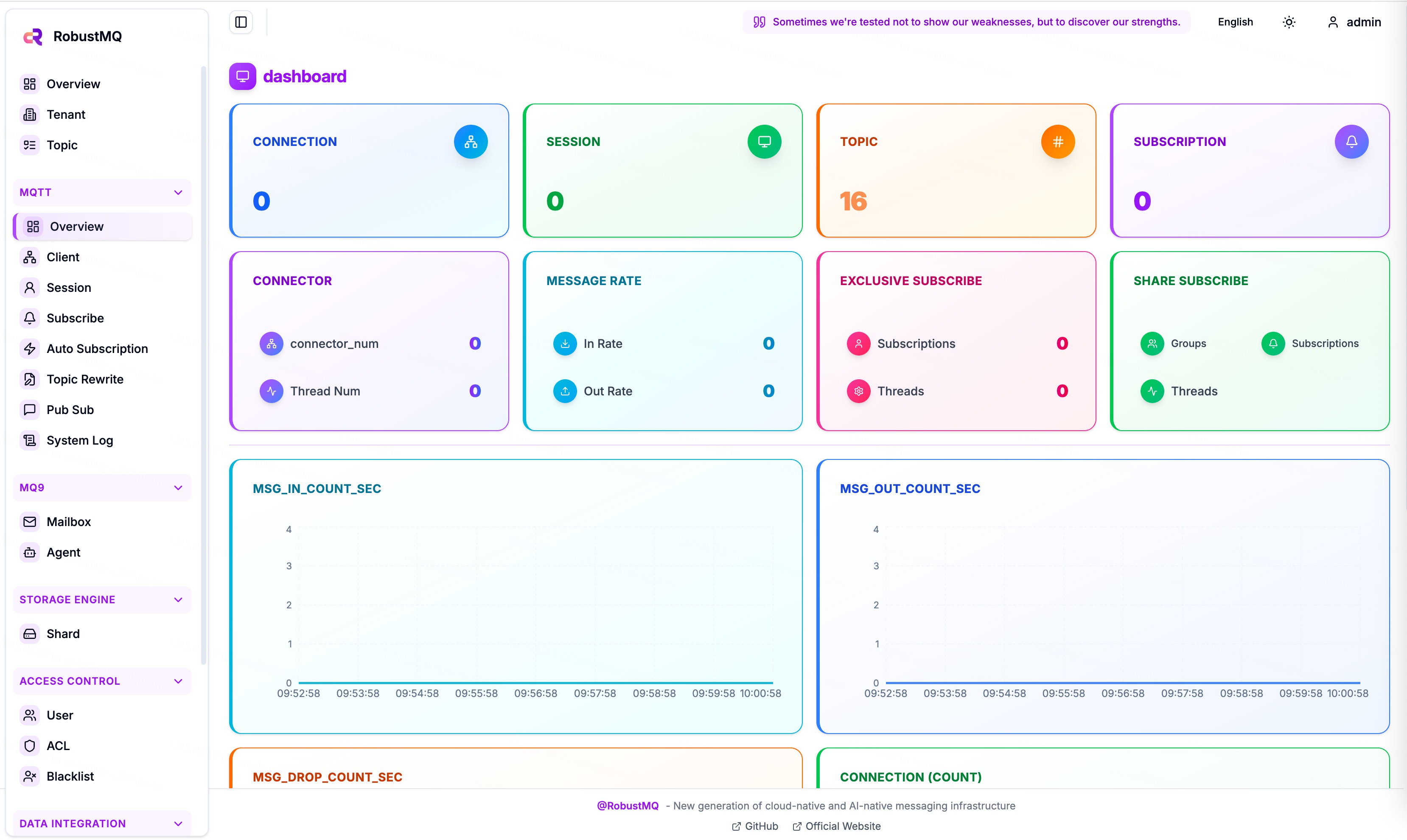
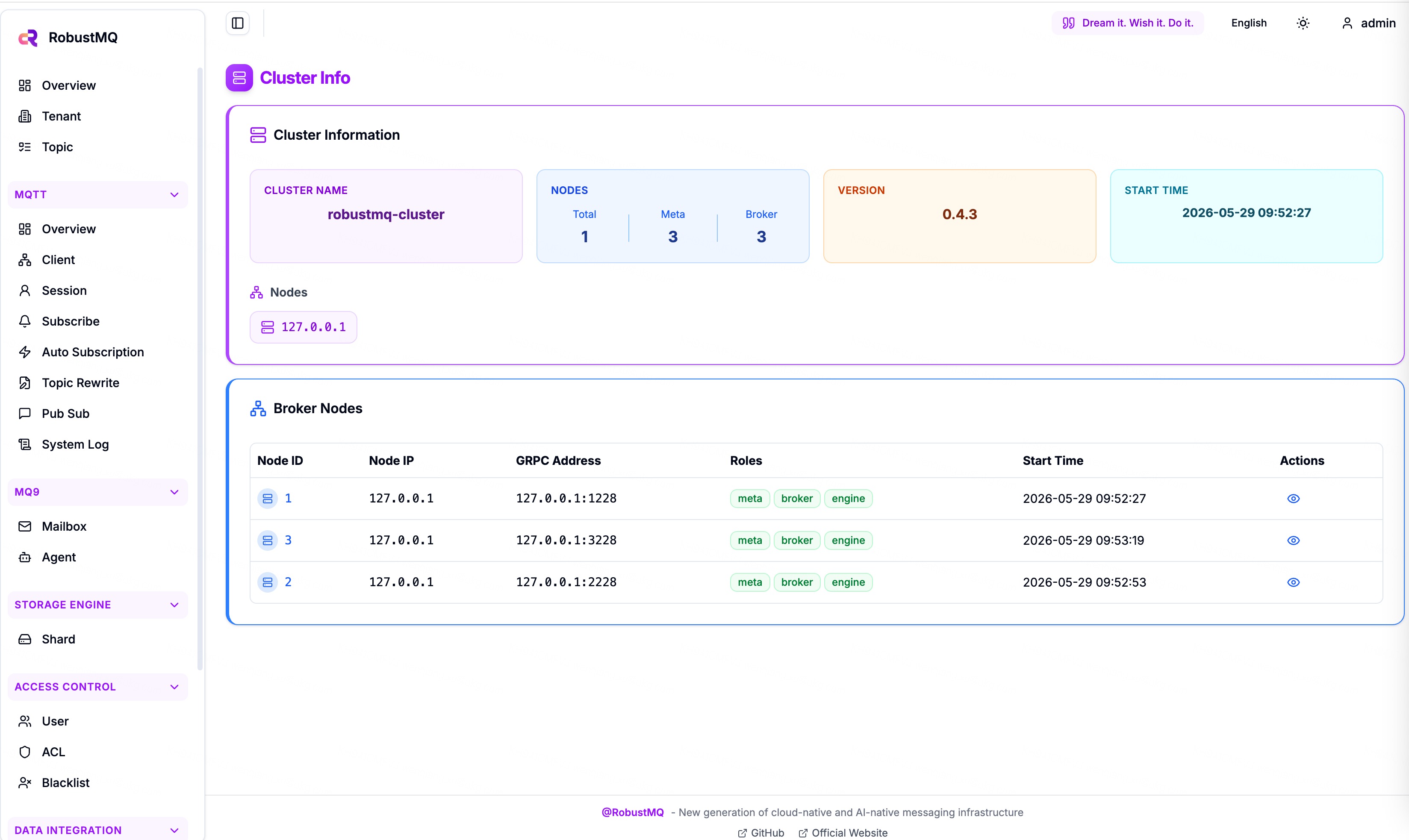
5. RobustMQ Dashboard: Web console for cluster overview, node status, Topic list, client connections, rule engine config. Lowers ops barrier for visual management.
6. Website and docs: Reworked site structure and docs covering quick start, architecture, config reference, API, benchmarking—lowering onboarding friction. Docs are kept in sync with code.
Roadmap
0.3.0 is a starting point. Next steps:
Performance and stability. MQTT connection path has clear optimization potential; Meta Service Raft write throughput is a bottleneck; storage read/write haven't been deeply tuned. These will continue.
MQTT feature completion. Full rule engine, Webhook integration, admin API, and monitoring dashboards are needed for production MQTT use.
AI MQ features. Topic-direct object storage (S3/MinIO as source), three-tier intelligent cache (memory/SSD/object storage), predictive prefetch for multi-epoch training—RobustMQ's main differentiators from other message queues.
Kafka features. Full Kafka protocol implementation so existing Kafka clients and tooling (Flink, Spark, Kafka Connect) connect without changes. Shared subscription to break Partition-based concurrency limits.
How to Use
RobustMQ aims for minimal deployment—no external dependencies; three commands for a full cluster.
One-command install and start—after the install script, run directly; no JVM, ZooKeeper, or other dependencies:
curl -fsSL https://raw.githubusercontent.com/robustmq/robustmq/main/scripts/install.sh | bash
broker-server start
With the cluster up, verify with any MQTT client:
mqttx pub -h localhost -p 1883 -t "test/topic" -m "Hello RobustMQ!"
mqttx sub -h localhost -p 1883 -t "test/topic"
Or open the Web console at http://localhost:58080 to view cluster status.
Quick start guide: https://robustmq.com/QuickGuide/Overview.html
0.3.0 marks RobustMQ's move from "finding direction" to "advancing steadily with clear direction." Architecture is fixed; positioning is clear; next is deepening and stabilizing each area.
Project: https://github.com/robustmq/robustmq
Welcome to try it and share feedback.